Leadership is directly accountable for delivery quality. Engineering decisions, escalation paths, and communication standards are owned by named operators, not anonymous support queues.
Founder walkthrough — recording in productionNot yet available.
Vertical Reference Blueprint
A multi-clinic care model requires consistent support ownership, endpoint hygiene, and backup validation across locations.
6 min read · Reference blueprint

Reference blueprint
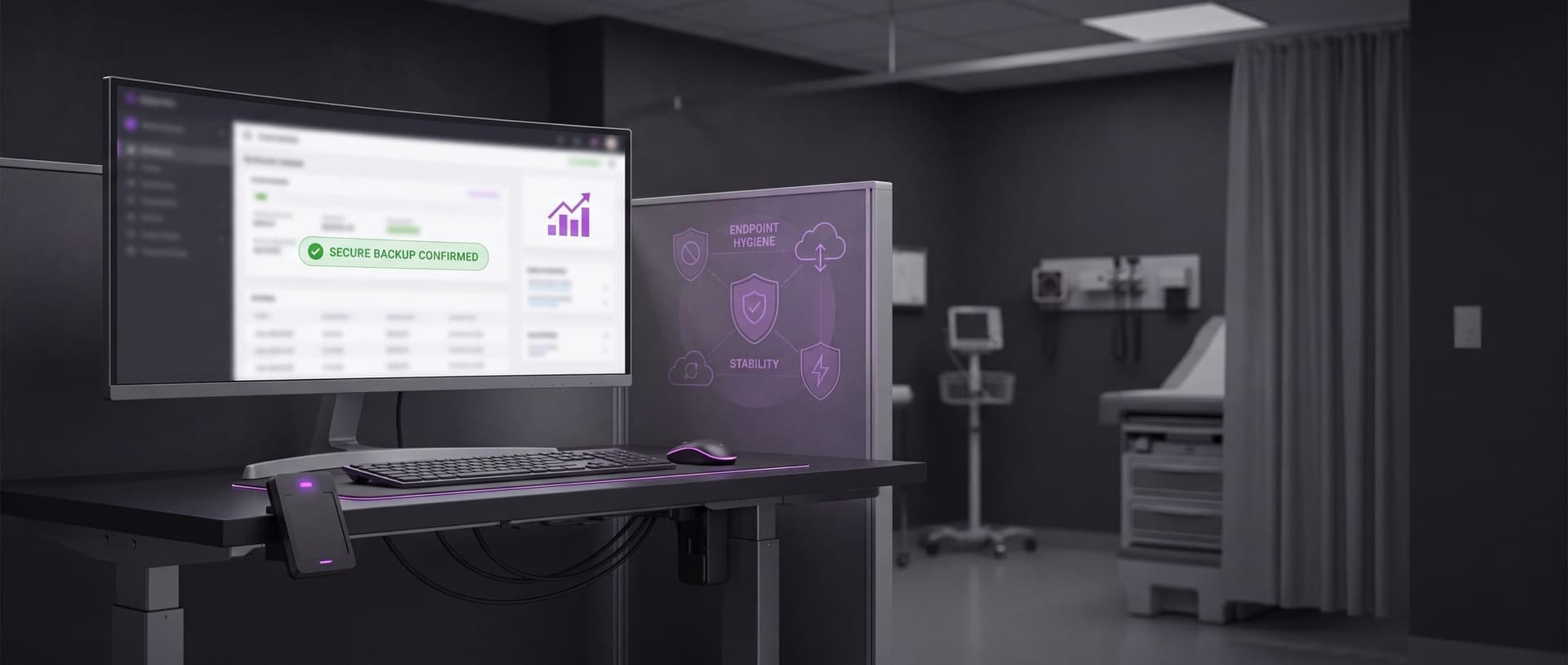
Clinical continuity depends on clear ownership of access, workstations, and recovery. This reference architecture connects urgent care-impacting requests to an accountable support path. The reference blueprint below shows how to make control coverage and recovery evidence visible to leadership.
Technology categories describe the reference design. Module selection and the indicative four-week timeline require discovery and client approval.
An urgent workstation or access failure can wait in a routine support queue when intake and ownership are unclear.
Backup status alone does not establish that care-critical information can be restored when needed.
Reference blueprint
Suggested modules connect service signals, accountable operators, and executive evidence. Operators approve production changes; scope and timing are agreed during discovery.
Assign access owners and collect evidence for identity and vendor-access reviews.
Separate urgent clinical-impacting requests from routine workstation support.
Review control gaps, recovery evidence, and accountable next actions.
Week 1
Inventory critical workflows, control owners, and available backup evidence.
Weeks 2–3
Validate intake priorities and review proposed remediation with operators.
Week 4
Run an agreed restore test and review the first executive control report.
The figures describe the reference architecture. The separate acceptance targets below provide a starting point for measuring a future deployment.
Proposed acceptance targets for a future scoped engagement, not measured customer results or service guarantees. Establish the baseline and agree the measurement window during discovery.
Automation handles detection, enrichment, and triage. Operators keep the decisions that touch client records and production systems.
Group recurring tickets into failure classes for operator triage.
Route endpoint and backup exceptions into the Workspace review queue.
Require operator approval before remediation touches a clinical workstation.
Social proof
Bitscaled publishes the operating model instead of collecting anonymous praise. Each card below points at the named operator or public page it comes from.
Leadership is directly accountable for delivery quality. Engineering decisions, escalation paths, and communication standards are owned by named operators, not anonymous support queues.
Founder walkthrough — recording in productionNot yet available.
1 of 5
These are first-party operating commitments from named Bitscaled operators and public pages. Client reviews are published only with written permission and named attribution, so this section stays verifiable.
Next step for healthcare operations
The first conversation should clarify what is broken, what is risky, and what should be handled first. From there, we can shape the right service path.