Moving Beyond Fragmented Security Tools
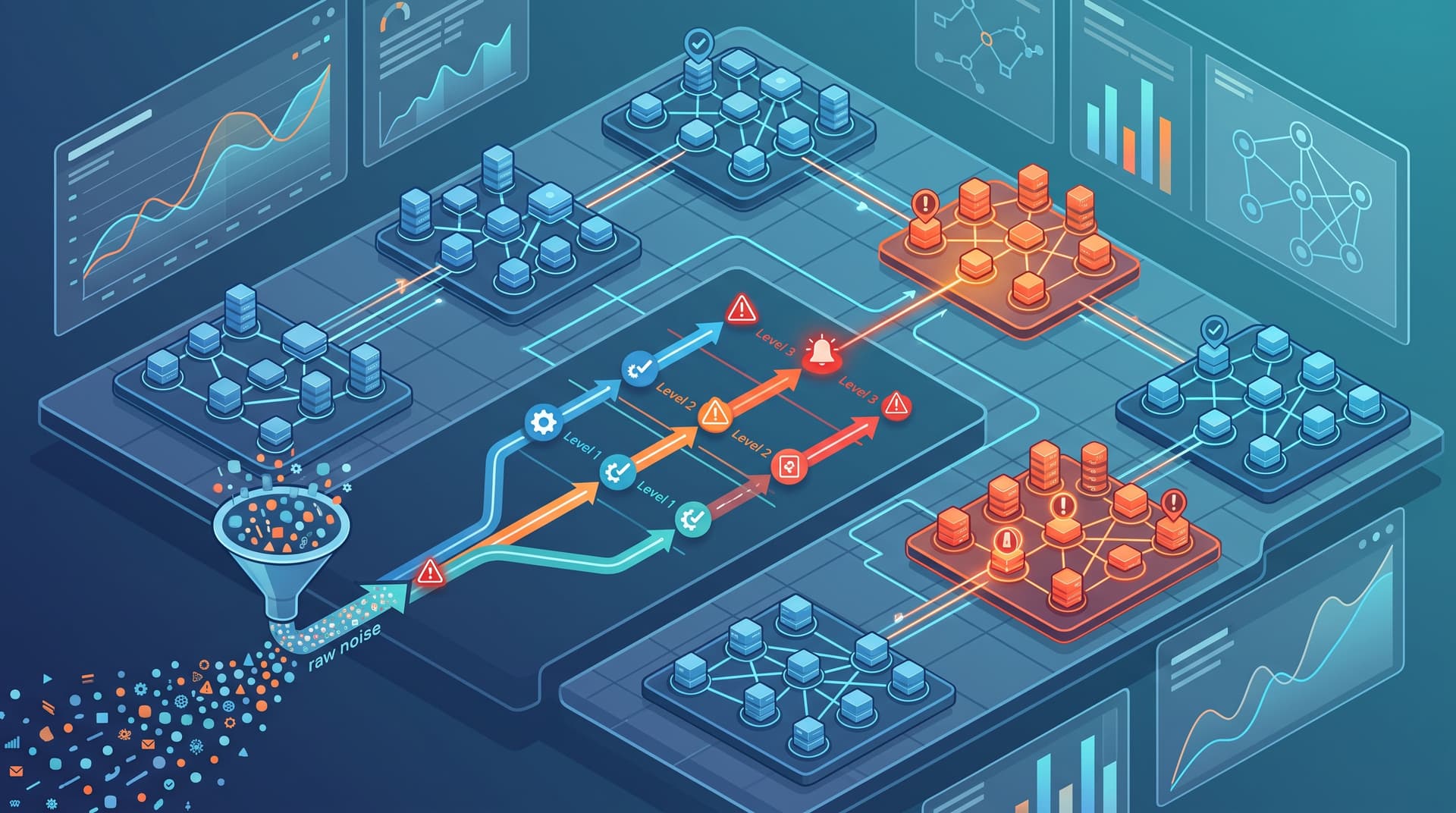
For growing organizations, cybersecurity risk rarely stems from a complete lack of security tools. More frequently, IT teams manage multiple disconnected software solutions that generate a constant stream of notifications without providing cohesive protection or active defense.
Establishing an effective operational security posture requires structuring defenses into clear, mutually supporting layers and knowing when automated alerts must be augmented by human-led detection and response.
The Five Pillars of a Practical Layered Defense
A resilient security architecture relies on depth. When an attacker bypasses one control, secondary layers must detect, contain, or mitigate the threat before operational disruption occurs.
1. Identity Defense
Identity has replaced the traditional network perimeter. Robust identity security includes:
- Mandatory Multi-Factor Authentication (MFA) utilizing phishing-resistant methods where applicable.
- Role-based access control (RBAC) enforced with least-privilege principles.
- Automated condition-based access checks that flag anomalous login locations or unmanaged devices.
2. Email & Communication Security
Email remains the primary entry point for social engineering, credential harvesting, and business email compromise (BEC).
- Advanced threat protection with dynamic link re-writing and sandboxed attachment analysis.
- Automated quarantine policies for domain spoofing and suspect inbox rule creation.
3. Endpoint Protection & EDR
Traditional antivirus is insufficient against living-off-the-land attacks and zero-day exploits. Endpoint Detection and Response (EDR) provides:
- Process-level visibility into system activities across workstations and servers.
- Behavioral detection to identify memory injection, privilege escalation, and lateral movement.
4. Immutable Backup & Business Continuity
Backups are the ultimate safeguard against ransomware and destructive attacks, provided they are isolated from daily administrative credentials.
- Immutable repository configurations that prevent encryption or deletion by unauthorized accounts.
- Air-gapped or secondary cloud destinations combined with scheduled, verified recovery drills.
5. Structured Human Response
Technology layers require clear human protocols. This includes routine security awareness training alongside structured internal escalation paths when suspicious behavior is observed.
Evaluating Alert-Only Tooling vs. Managed Detection & Response (MDR)
Deploying security tooling like EDR is an essential step, but tooling alone creates operational overhead. Organizations must evaluate whether internal staff can realistically monitor and act on telemetry around the clock.
Alert-Only Tooling
Alert-only security solutions generate telemetry and send notifications when suspicious indicators are detected.
- Best suited for: Organizations with dedicated, 24/7 Security Operations Center (SOC) personnel who can immediately triage raw telemetry.
- Operational challenge: Unfiltered alerts often lead to notification fatigue, delayed response times outside business hours, and misinterpretation of complex threat chains.
Managed Detection & Response (MDR)
MDR pairs advanced telemetry tools with a specialized 24/7 team of security analysts who actively validate alerts, hunt for undetected threats, and perform rapid containment actions on behalf of the client.
- When MDR is worth the investment:
- Lean internal IT teams that cannot maintain 24/7 active monitoring.
- Strict compliance requirements (e.g., CMMC, HIPAA, PCI-DSS) mandating documented continuous security monitoring.
- High business impact of downtime, where dwell time must be reduced from days to minutes.
First-Hour Incident Response: Actionable Steps Without Panic
When a potential breach or active threat is detected, the initial 60 minutes set the trajectory for containment and recovery. A disciplined response avoids common pitfalls like shutting down systems prematurely, which can destroy volatile memory evidence.
- Network Containment (Not Hard Shutdowns): Utilize your EDR platform to isolate compromised endpoints from the network logically. Keep machines powered on to preserve RAM and forensic artifacts.
- Session Termination & Credential Invalidation: Immediately revoke active user sessions and reset credentials for affected accounts within your identity provider.
- Scope Verification: Review tenant logs and EDR console timelines to identify secondary persistence mechanisms or lateral movement to adjacent systems.
- Evidence Preservation: Export system audit logs, tenant sign-in activity, and network flow records to secure, write-once storage.
- Stakeholder Escalation: Engage designated executive leadership, legal counsel, and technical security partners according to your pre-established Incident Response Plan.
Strengthening Your Operational Defense
A well-architected cybersecurity strategy balances proactive prevention layers with reliable, rapid response capabilities. By evaluating your identity, endpoint, and operational monitoring models, you can eliminate blind spots before an incident occurs.
Book a cybersecurity posture review with Bitscaled to audit your current defensive layers and align your security operations with industry standards.